Independent Functioning IEP Goals: 140+ SMART Examples

Preparing students for adult life is about far more than teaching academic content. Many students who receive special education services also require direct instruction in the practical routines needed to navigate daily life with increased confidence. Skills like maintaining personal hygiene, preparing meals, managing money, using transportation, maintaining a home, and staying safe within the community are all critical to kids' long-term independence.
This is why Independent functioning IEP goals are so important. Often referred to as Independent living IEP goals, these goals prepare students to apply the day-to-day skills necessary to live more independently at home, schools, workplaces and communities. When they are individualised, measurable, and based on a student's current abilities, they provide educators with a roadmap for instructional support and make progress easier to track throughout the IEP year.
In this guide, you will find over 200 SMART independent functioning IEP goal examples sorted into 10 different categories so you can identify the objective(s) that best align with your student’s functional needs and transition plan.
How to Write Effective Independent Living IEP Goals
Well-written independent living IEP goals focus on only one, clearly defined functional skill that can be directly observed and measured. Avoid broad, open-ended objectives (like, "Improve independent living skills") and describe the specific behaviours you want the student to exhibit. Also, don't forget to define what successful student performance would look like.
A well-written IEP goal should:
- Promote increased autonomy in students' daily activities.
- Be realistic and achievable by the end of the school year.
- Include measurable criteria (such as accuracy, level of independence, or frequency).
- Identify one functional daily-living skill.
For example, instead of writing, "The student will develop cooking skills", write, "Student will independently prepare a simple microwave meal using appropriate safety procedures on 4 out of 5 opportunities."
Because many daily living skills are practised across classrooms, homes, and/or community settings, collecting reliable data to track students' progress towards their IEPs can be difficult. Digital tools like AbleSpace make it easier for educators to document data and monitor progress toward Independent functioning IEP goals without creating additional paperwork.
With these tips in mind, look through the Independent functioning IEP goal categories below to find SMART goal examples that'll match your student's needs.
Independent Living Skill Goal Categories
Personal Care & Hygiene
- Maintaining a Daily Hygiene Routine: Student will independently complete all components of their individualized daily hygiene routine before leaving home on 4 out of 5 days.
- Recognizing Personal Hygiene Needs: Student will identify when personal hygiene tasks are needed based on observable indicators (e.g., body odor, oily hair, dirty hands, visible dirt) and complete the appropriate hygiene task on 4 out of 5 opportunities.
- Selecting Appropriate Hygiene Products: Given a hygiene need, student will independently select the appropriate personal care product (e.g., shampoo, body wash, toothpaste, deodorant) with at least 90% accuracy.
- Replacing Personal Care Items: Student will identify when personal care items (e.g., toothbrushes, razors, loofahs, contact lens cases) require routine replacement and appropriately replace them according to recommended guidelines on 4 out of 5 opportunities.
- Maintaining Oral Health: Student will independently complete all recommended oral hygiene tasks using proper technique during daily routines on 4 out of 5 observed days.
- Maintaining Nail Hygiene: Student will maintain clean, appropriately trimmed fingernails and seek assistance when necessary for nail care on 4 out of 5 opportunities.
- Managing Personal Hygiene During Illness: Student will modify personal hygiene practices appropriately during illness (e.g., increased handwashing, proper disposal of tissues, replacing a toothbrush after illness when recommended) on 4 out of 5 opportunities.
- Dressing in Clean Clothing: Student will independently select clean clothing following personal hygiene routines and avoid rewearing visibly soiled garments on 4 out of 5 opportunities.
- Maintaining Hygiene in Public Settings: Student will independently complete appropriate personal hygiene tasks in community restrooms while following expected public restroom practices on 4 out of 5 opportunities.
- Responding to Hygiene Needs After Physical Activity: Following exercise or physically demanding activities, student will independently complete appropriate hygiene tasks (e.g., washing hands, changing clothing, showering when appropriate) on 4 out of 5 opportunities.
- Preventing the Spread of Illness: Student will demonstrate appropriate hygiene practices that reduce the spread of illness, including proper cough etiquette and hand hygiene, on 4 out of 5 observed opportunities.
- Identifying Personal Care Needs While Away From Home: Student will recognize when personal hygiene is needed during community outings and independently use available facilities or personal care supplies on 4 out of 5 opportunities.
- Organizing Personal Care Items: Student will store personal hygiene items in designated locations and maintain them in a clean, organized condition on 4 out of 5 opportunities.
- Using Hygiene Products Safely: Student will use personal hygiene products according to label directions and safety recommendations on 4 out of 5 opportunities.
- Preparing Personal Care Items for Overnight Travel: Given an overnight stay or trip, student will independently pack all necessary personal hygiene items based on the duration of the trip with at least 90% accuracy.
Clothing & Laundry Management IEP Goals
- Clothing Selection: Given the day's weather or activity, student will independently select appropriate clothing (e.g., raincoat for rain, athletic wear for PE, warm clothing for cold weather) on 4 out of 5 opportunities.
- Identifying Clean Clothing: Student will correctly distinguish clean clothing from clothing that needs laundering with 90% accuracy across five consecutive opportunities.
- Sorting Laundry: Student will sort laundry into appropriate categories (e.g., lights, darks, delicates, towels) with at least 90% accuracy on four consecutive laundry sessions.
- Reading Clothing Labels: Student will identify the recommended washing and drying instructions on clothing care labels with 85% accuracy across 10 different garments.
- Measuring Laundry Detergent: Student will measure and add the correct amount of detergent for a laundry load according to product instructions on 4 out of 5 opportunities.
- Operating a Washing Machine: Student will independently load clothing, choose the correct wash cycle, and start the washing machine without adult assistance on 4 consecutive opportunities.
- Operating a Dryer: Student will transfer washed clothing to the dryer, select the appropriate drying settings, and safely remove clothing after the cycle on 4 out of 5 opportunities.
- Air Drying Clothes: Student will identify clothing items that should be air dried and hang or lay them flat correctly according to care instructions with 90% accuracy.
- Organizing Clothing Storage: Student will organize clothing into designated drawers, shelves, or closet sections so items are easily accessible with 90% independence.
- Clothing Repairs: Student will repair a missing button or small seam using basic sewing supplies while following demonstrated safety procedures on 4 out of 5 opportunities.
- Shoe Care: Student will clean, polish (when appropriate), and properly store shoes after use on 4 consecutive opportunities.
- Clothing Inspection: Before wearing an item, student will inspect clothing for stains, tears, missing buttons, or excessive wrinkles and identify whether it requires cleaning or repair with 90% accuracy.
- Packing Clothing: Given a one-night trip scenario, student will independently pack an appropriate set of clothing items based on the planned activities with no more than one prompt.
- Replacing Worn Clothing: Student will identify clothing that is no longer wearable due to damage, poor fit, or excessive wear and appropriately set it aside for repair, donation, or replacement on 4 out of 5 opportunities.
Meal Preparation, Nutrition & Kitchen Safety
- Handwashing Before Food Preparation: Student will independently wash their hands before handling food on 4 out of 5 observed meal preparation opportunities.
- Gathering Meal Ingredients: Given a specific recipe or meal, student will independently gather all required ingredients before beginning food preparation with at least 90% accuracy.
- Using Measuring Tools: Student will accurately measure dry and liquid ingredients using appropriate measuring cups and spoons with 90% accuracy across 5 cooking activities.
- Preparing Fruits and Vegetables: Student will independently wash fresh fruits and vegetables before eating or cooking them on 4 out of 5 opportunities.
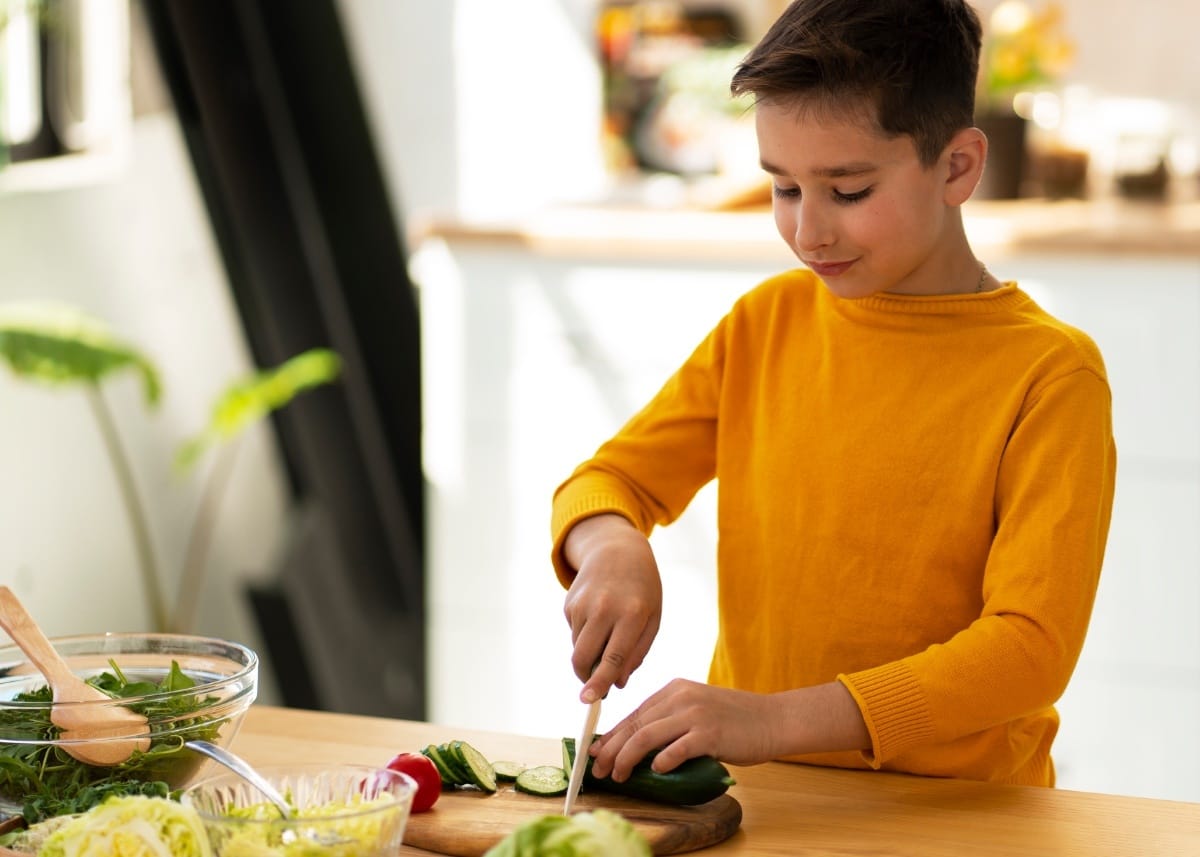
- Safe Knife Skills: Student will safely cut soft foods (e.g., bananas, cucumbers, strawberries) using age-appropriate knife techniques while following established safety rules on 4 out of 5 opportunities.
- Preparing a Cold Meal: Student will independently prepare a simple no-cook meal (e.g., sandwich, salad, yogurt parfait) using the required ingredients and utensils on 4 out of 5 opportunities.
- Using a Microwave Safely: Student will safely heat food in a microwave by selecting the correct settings, using microwave-safe containers, and checking food temperature before eating on 4 out of 5 opportunities.
- Using a Toaster Safely: Student will independently operate a toaster while following established kitchen safety procedures on 4 out of 5 opportunities.
- Preparing a Simple Hot Meal: Student will independently prepare a simple cooked meal (e.g., scrambled eggs, oatmeal, grilled cheese) while completing all required cooking steps safely on 4 out of 5 opportunities.
- Reading Nutrition Labels: Given packaged food items, student will identify key nutrition label information (e.g., serving size, added sugar, sodium, protein) with at least 90% accuracy.
- Choosing Nutritious Snacks: Given multiple snack options, student will select a balanced snack that includes at least one nutritious food choice on 4 out of 5 opportunities.
- Building a Balanced Meal: Student will assemble a meal that includes foods from multiple food groups according to individualized nutrition guidelines on 4 out of 5 opportunities.
- Identifying Expired Food: Student will determine whether packaged or refrigerated food is safe to consume by checking expiration or use-by dates with 90% accuracy.
- Storing Leftovers Properly: Student will transfer leftover food into appropriate containers and store it safely in the refrigerator within the recommended time frame on 4 out of 5 opportunities.
- Cleaning Food Preparation Surfaces: Student will clean and sanitize countertops, cutting boards, and food preparation areas after cooking on 4 out of 5 opportunities.
- Washing Dishes After Meal Preparation: Student will wash, rinse, dry, and store dishes and cooking utensils after preparing a meal on 4 out of 5 opportunities.
- Portioning Food Appropriately: Student will serve an appropriate portion of food using individualized portion guidelines on 4 out of 5 observed meals.
- Fire Prevention During Cooking: Student will demonstrate safe cooking practices by monitoring food while cooking, keeping flammable materials away from heat sources, and turning off appliances after use on 90% of observed cooking sessions.
Household Cleaning & Home Maintenance
- Maintaining a Clean Living Space: Student will independently maintain assigned living areas in a clean and functional condition by completing routine household cleaning tasks on 4 out of 5 weekly observations.
- Selecting Appropriate Cleaning Methods: Given a household cleaning task, student will independently select the appropriate cleaning tools and products based on the surface being cleaned with at least 90% accuracy.
- Recognizing When Cleaning Is Needed: Student will identify when household areas require cleaning based on observable conditions (e.g., spills, dust buildup, overflowing trash, unpleasant odors) and initiate the appropriate cleaning task on 4 out of 5 opportunities.
- Cleaning and Sanitizing High-Use Areas: Student will independently clean and disinfect frequently used household surfaces using appropriate procedures on 4 out of 5 opportunities.
- Maintaining Bathroom Cleanliness: Student will independently clean and sanitize essential bathroom fixtures to maintain a hygienic environment on 4 out of 5 opportunities.
- Caring for Household Floors: Student will independently determine the appropriate cleaning method for different flooring surfaces (e.g., sweeping, vacuuming, mopping) and complete the task successfully on 4 out of 5 opportunities.
- Maintaining Sleeping Areas: Student will independently maintain a clean and organized sleeping area by making the bed, changing linens as needed, and removing unnecessary clutter during weekly observations with at least 90% consistency.
- Managing Household Waste: Student will independently collect, sort, and dispose of household waste and recyclable materials according to household or community guidelines on 4 out of 5 opportunities.
- Caring for Household Equipment: Student will clean and maintain commonly used household equipment (e.g., vacuum cleaner, mop, broom, cleaning cloths) according to manufacturer or household guidelines on 4 out of 5 opportunities.
- Reporting Home Maintenance Concerns: Student will identify household conditions requiring repair (e.g., plumbing leaks, damaged fixtures, pest activity, malfunctioning appliances) and report them to the appropriate individual on 4 out of 5 opportunities.
- Performing Basic Home Maintenance Tasks: Student will independently complete basic household maintenance tasks (e.g., replacing light bulbs, tightening loose hardware, replacing HVAC filters) within established safety guidelines on 4 out of 5 opportunities.
- Maintaining Household Safety During Cleaning: Student will demonstrate safe cleaning practices by preventing slip hazards, using protective equipment when appropriate, and storing hazardous materials safely on 4 out of 5 opportunities.
- Maintaining Outdoor Living Areas: Student will independently complete basic outdoor home maintenance tasks (e.g., sweeping walkways, removing debris from entryways, watering plants as assigned) on 4 out of 5 opportunities.
- Organizing Household Storage Areas: Student will maintain household storage spaces by returning frequently used items to designated locations and keeping storage areas accessible on 4 out of 5 opportunities.
Grocery Shopping & Consumer Skills
- Creating a Shopping List: Student will create a grocery shopping list based on a provided meal plan or household needs with at least 90% accuracy on 4 out of 5 opportunities.
- Locating Grocery Items: Student will independently locate grocery items in a store using aisle signs or store organization with 90% accuracy across five shopping trips.
- Selecting Fresh Produce: Student will identify fresh fruits and vegetables by selecting items that are free from visible spoilage, bruising, or mold on 4 out of 5 opportunities.
- Weighing Produce: Student will independently weigh fruits or vegetables using the store's produce scale and obtain the correct label on 4 out of 5 opportunities.
- Identifying Sale Prices: Student will determine whether a product is on sale by interpreting shelf tags, discount labels, or promotional signage with 90% accuracy.
- Using Coupons: Student will correctly apply paper or digital coupons to eligible purchases during checkout on 4 out of 5 shopping opportunities.
- Selecting the Correct Brand or Product: Given multiple similar products, student will identify and purchase the specified brand, flavor, size, or variety with at least 90% accuracy.
- Requesting Assistance from Store Staff: Student will appropriately ask a store employee for help locating an item or resolving a shopping concern on 4 out of 5 opportunities.
- Self-Checkout: Student will independently complete a purchase using a self-checkout station, including scanning items, bagging groceries, and completing payment, on 4 out of 5 opportunities.
- Bagging Groceries: Student will bag groceries by grouping similar items and separating fragile, frozen, and cleaning products appropriately on 4 out of 5 opportunities.
- Transporting Groceries: Student will safely transport grocery bags from the store to a vehicle or home without damaging purchased items on 4 out of 5 opportunities.
- Comparing Product Quantities: Student will compare product sizes or quantities and determine which option provides greater value based on quantity and price with 85% accuracy.
- Identifying Essential Purchases: Student will distinguish between essential grocery items and nonessential purchases according to a provided shopping list with 90% accuracy across five shopping activities.
- Checking Receipts: Student will review a grocery receipt and identify pricing errors, missing items, or duplicate charges with 90% accuracy across five receipts.
- Returning an Incorrect Item: Student will complete the process of returning or exchanging an incorrect or damaged item by following store procedures on 4 out of 5 opportunities.
Money Management
- Identifying Currency: Student will correctly identify U.S. coins and bills by name and value with 100% accuracy across ten consecutive trials.
- Counting Cash: Student will count a combination of coins and bills to determine the total amount with at least 90% accuracy across five opportunities.
- Making Exact Payments: Student will provide the exact cash amount for a purchase when the total is given on 4 out of 5 opportunities.
- Counting Change: Student will verify that the correct amount of change has been received after a cash purchase with 90% accuracy across five shopping scenarios.
- Budgeting for a Purchase: Student will determine whether available funds are sufficient to complete a planned purchase with 90% accuracy across ten scenarios.
- Tracking Spending: Student will record daily purchases in a spending log with complete accuracy for four consecutive weeks.
- Distinguishing Needs and Wants: Student will categorize purchases as needs or wants with at least 90% accuracy across twenty examples.
- Calculating Total Purchase Cost: Student will calculate the total cost of multiple items before checkout with 90% accuracy across five shopping activities.
- Using a Debit Card: Student will independently complete a purchase using a debit card by inserting, tapping, or swiping the card and following payment prompts on 4 out of 5 opportunities.
- Using an ATM: Student will complete a basic ATM transaction, including checking an account balance or withdrawing cash, while following all security procedures on 4 out of 5 opportunities.
- Reading a Bank Statement: Student will identify deposits, withdrawals, and the current balance on a monthly bank statement with 90% accuracy across five examples.
- Making a Bank Deposit: Student will complete a cash or check deposit using a bank teller or ATM with no more than one verbal prompt on 4 out of 5 opportunities.
- Paying a Bill: Student will submit a utility, phone, or other household bill by the stated due date using an approved payment method on 4 out of 5 opportunities.
- Recognizing Financial Scams: Student will identify common warning signs of financial scams (e.g., requests for gift cards, urgent payment demands, suspicious links) with 90% accuracy across ten scenarios.
- Protecting Financial Information: Student will demonstrate safe handling of personal financial information by keeping PINs, passwords, and account details confidential on 100% of observed opportunities.
- Saving Money: Student will deposit a predetermined amount into a savings account or designated savings fund according to an established savings goal for eight consecutive weeks.
- Using a Digital Payment Method: Student will complete a purchase using an approved digital payment method while confirming the payment amount before authorizing the transaction on 4 out of 5 opportunities.
Personal Health & Medication Management
- Identifying Personal Information: Student will accurately state or provide their full name, date of birth, home address, emergency contact, and primary healthcare provider information on 4 out of 5 opportunities.
- Describing Symptoms: Student will accurately describe physical symptoms (e.g., pain, fever, nausea, dizziness) using appropriate health-related vocabulary during simulated or real health situations on 4 out of 5 opportunities.
- Measuring Body Temperature: Student will correctly use a digital thermometer and accurately interpret whether the reading is within a normal or elevated range on 4 out of 5 opportunities.
- Monitoring Weight: Student will independently measure and record their body weight using a digital scale once per week for eight consecutive weeks.
- Monitoring Blood Pressure: Student will correctly use an automated blood pressure monitor and record the results with 90% accuracy across five opportunities.
- Scheduling Medical Appointments: Student will independently schedule a medical, dental, or vision appointment using a phone or online scheduling system on 4 out of 5 opportunities.
- Completing Health Forms: Student will accurately complete basic medical or dental intake forms using personal information with at least 90% accuracy across five opportunities.
- Identifying Medication Labels: Student will correctly identify the medication name, dosage, frequency, and expiration date on prescription labels with 90% accuracy across ten examples.
- Taking Medication as Prescribed: Student will independently take prescribed medication according to the dosage and schedule documented by their healthcare provider on 90% of observed opportunities.
- Using a Pill Organizer: Student will accurately organize prescribed medications into a weekly pill organizer with no more than one prompt on 4 out of 5 opportunities.
- Refilling Prescriptions: Student will independently request a prescription refill before medication supplies are exhausted on 4 out of 5 opportunities.
- Storing Medications Safely: Student will store prescription and over-the-counter medications in appropriate locations according to label instructions on 100% of observed opportunities.
- Identifying Medication Side Effects: Student will identify common side effects or adverse reactions listed for prescribed medications and report concerns to the appropriate adult or healthcare provider on 4 out of 5 opportunities.
- Managing Minor Injuries: Student will appropriately clean and cover minor cuts or scrapes using basic first aid supplies while following established first aid procedures on 4 out of 5 opportunities.
- Maintaining a First Aid Kit: Student will inspect a household first aid kit monthly and identify missing or expired supplies with 90% accuracy for three consecutive months.
- Recognizing When Medical Care Is Needed: Student will distinguish between health situations that can be managed at home and those requiring professional medical care with 90% accuracy across ten scenarios.
Transportation & Community Access
- Purchasing a Transit Ticket: Student will independently purchase a bus or train ticket using a ticket machine, transit app, or ticket counter on 4 out of 5 opportunities.
- Requesting a Ride: Student will independently arrange transportation through an approved ride-sharing service, family member, or community transportation program while confirming pickup and destination details on 4 out of 5 opportunities.
- Following Walking Routes: Student will safely travel a predetermined walking route by using sidewalks, crosswalks, and pedestrian signals on 4 out of 5 community-based instruction opportunities.
- Crossing Streets Safely: Student will demonstrate safe street-crossing procedures by checking traffic, obeying pedestrian signals, and crossing at designated crossings on 100% of observed opportunities.
- Identifying Community Landmarks: Student will identify at least three landmarks along a familiar community route to support independent navigation on 4 out of 5 opportunities.
- Locating Community Services: Student will independently locate common community resources (e.g., post office, pharmacy, grocery store, bank, library) using maps or directories with 90% accuracy.
- Finding a Destination: Student will independently navigate from a starting location to a designated community destination using a map or navigation app on 4 out of 5 opportunities.
- Carrying Essential Travel Items: Student will independently verify possession of essential travel items (e.g., identification, payment method, transit pass, phone) before leaving for a community outing on 4 out of 5 opportunities.
- Reading Community Signs: Student will accurately interpret common community signs (e.g., Exit, Restroom, No Entry, Information, Stop) with 90% accuracy across ten examples.
- Locating Parking Areas: Student will identify designated parking areas, accessible parking spaces, and pedestrian walkways in community settings on 4 out of 5 opportunities.
- Responding to Transportation Delays: Student will identify an appropriate alternative transportation option when public transportation is delayed or unavailable in 90% of simulated scenarios.
- Identifying Emergency Exits: Student will locate emergency exits and emergency instructions on public transportation vehicles or in transportation facilities with 100% accuracy across five opportunities.
Home Safety & Emergency Preparedness
- Identifying Emergency Numbers: Student will correctly identify the appropriate emergency phone number for police, fire, and medical emergencies with 100% accuracy across five consecutive trials.
- Calling for Emergency Assistance: Student will accurately report their name, location, and the nature of an emergency during a simulated emergency phone call on 4 out of 5 opportunities.
- Using Smoke Detectors: Student will identify the purpose of smoke detectors, recognize the alarm sound, and describe the appropriate response with 90% accuracy across five scenarios.
- Practicing Emergency Evacuation: Student will safely evacuate a designated building using the assigned exit route within the expected time during emergency drills on 4 out of 5 opportunities.
- Identifying Fire Hazards: Student will identify common household fire hazards (e.g., unattended cooking, overloaded outlets, candles near flammable materials) with 90% accuracy across ten scenarios.
- Using a Fire Extinguisher: Student will demonstrate the correct steps for operating a fire extinguisher during a supervised training activity with 90% accuracy.
- Preventing Electrical Hazards: Student will identify unsafe electrical situations (e.g., damaged cords, overloaded power strips, exposed wires) with 90% accuracy across ten examples.
- Storing Hazardous Household Products: Student will place cleaning products, chemicals, and other hazardous household items in appropriate storage locations according to safety guidelines on 4 out of 5 opportunities.
- Identifying Poisonous Substances: Student will distinguish between food, medication, and hazardous household substances with 100% accuracy across ten examples.
- Responding to a Power Outage: Student will identify appropriate safety procedures to follow during a power outage with 90% accuracy across five simulated scenarios.
- Recognizing Severe Weather Alerts: Student will correctly interpret common weather alerts (e.g., tornado warning, hurricane warning, flood warning, severe thunderstorm warning) and identify the appropriate protective action with 90% accuracy.
- Securing Doors and Windows: Student will independently lock doors and accessible windows before leaving home or going to bed on 4 out of 5 opportunities.
- Responding to a Gas Leak: Student will identify the signs of a possible gas leak and describe the appropriate emergency response procedures with 90% accuracy across five scenarios.
Technology for Independent Living
- Unlocking a Personal Device: Student will independently unlock their smartphone or tablet using the assigned authentication method (e.g., PIN, fingerprint, facial recognition) on 4 out of 5 opportunities.
- Connecting to a Wi-Fi Network: Student will independently connect a personal device to a known Wi-Fi network using the correct credentials on 4 out of 5 opportunities.
- Charging Electronic Devices: Student will connect a personal electronic device to the appropriate charger and confirm that charging has begun on 4 out of 5 opportunities.
- Using a QR Code: Student will scan a QR code using a mobile device to access menus, forms, or informational resources on 4 out of 5 opportunities.
- Identifying Secure Websites: Student will distinguish between secure and non-secure websites by identifying common security indicators (e.g., HTTPS, lock icon) with at least 90% accuracy.
- Creating Strong Passwords: Student will create passwords that meet established security guidelines without including easily identifiable personal information on 4 out of 5 opportunities.
- Recognizing Phishing Attempts: Student will identify common signs of phishing emails, text messages, or pop-up scams with at least 90% accuracy.
- Completing an Online Form: Student will accurately complete and submit a basic online form using required fields with at least 90% accuracy.
- Printing a Document: Student will independently connect to an available printer and print a specified document on 4 out of 5 opportunities.
- Locating Nearby Services with Digital Maps: Student will use a map application to locate a specified nearby destination (e.g., pharmacy, grocery store, bank) with at least 90% accuracy.
- Using a Ride-Hailing App: Student will independently request a ride using an approved ride-hailing application and verify the driver's identity before entering the vehicle on 4 out of 5 opportunities.
Why Independent Living Skills Matter
Teaching functional life skills doesn't just assist students with their daily activities. It also gives them the resources they need to take control of their lives, make choices, solve problems, use functional communication skills, participate in their communities, and require less adult support over time. Although some students may make minimal accomplishments in everyday routines, that's still significant because it increases their confidence and overall quality of life.
Because these skills are practised in authentic settings, they also provide great opportunities for meaningful assessment. Educators can assess how well students can apply what they have learned from classroom experiences, community-based instruction, home routines, or simulated real-world practices. This helps them better document the student's growth/progression and allows for adjustments to be made within the instructional process.
The independent functioning IEP goals in this guide are meant to serve as practical examples (not as one-size-fits-all objectives). Every student has different strengths, support needs, and transition priority areas; therefore, each goal should be modified to fit their present levels of performance while remaining measurable and achievable.
Whether you're developing independent living goals for IEP transition planning or building foundational daily living routines with younger students, using individualised instruction, collecting data regularly, and practising consistently will ensure that independent functioning skills continue to grow long after the end of the IEP year.